
An incipient fire is a critical situation that requires quick and level-headed action. In this blog article, you will learn what an incipient fire is and how and when you can extinguish an incipient fire. We also look at the question of whether employees are obliged to extinguish an incipient fire.
What is an incipient fire?
An incipient fire refers to a fire in its initial phase. The fire is still in a limited area and can be controlled with simple means such as fire extinguishers. Typically, the heat and smoke development in an incipient fire is low, which makes it easier to intervene.
Incipient fires are often smouldering fires caused by:
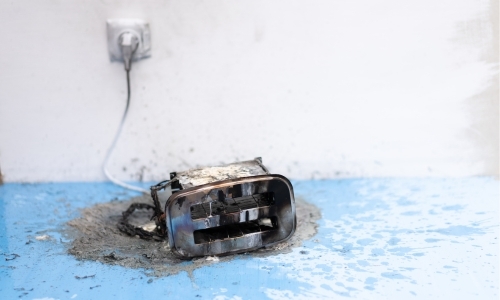
- defective electronic devices
- overloaded sockets
- forgotten hotplates
- unattended candles

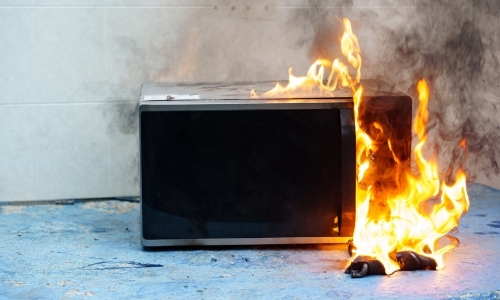
However, an incipient fire can very quickly develop into a full-blown fire, especially if there is insufficient intervention or unfavorable conditions such as strong draughts. It is therefore particularly important to act quickly and decisively.
Characteristics of an incipient fire
- Limited spread: The fire remains confined to a small area.
- Low smoke development: Smoke does not yet significantly obstruct visibility. Nevertheless, smoke is always highly toxic and should never be underestimated.
- Simple extinguishing options: Portable fire extinguishers are usually sufficient to fight the fire.
- Early detection: Incipient fires are often detected as soon as they start. Smoke detectors play a crucial role here, especially in areas with little traffic or during the night.
How and when should you extinguish an incipient fire?
The decision to extinguish an incipient fire depends on the situation and personal skills. Follow these steps:
- Raise the alarm: Notify the fire department by calling the emergency number 112 before intervening yourself. Even if the fire appears to have been successfully extinguished, the fire department should be informed to ensure that no embers remain.
- Assess your own risk: Never enter areas with dense smoke and leave the scene if you feel unsafe. Your safety is the top priority.

- Use suitable extinguishing agents: Use a fire extinguisher with a suitable extinguishing agent for the respective fire class. Water is only suitable for solid materials such as wood or paper, but not for grease or electrical fires.
- Keep a safe distance: Make sure you keep a safe distance from the fire and always work in the direction of escape. Never work with your back to the escape route so that you can escape quickly in an emergency.

- Check: Make sure that the fire has been completely extinguished. Otherwise, you should leave the area and let the fire department take control.
Important: Only extinguish an incipient fire if you are sure that your safety is not at risk. Otherwise, leave the area and leave the extinguishing to the emergency services.
Excursus: Do employees have to extinguish an incipient fire?
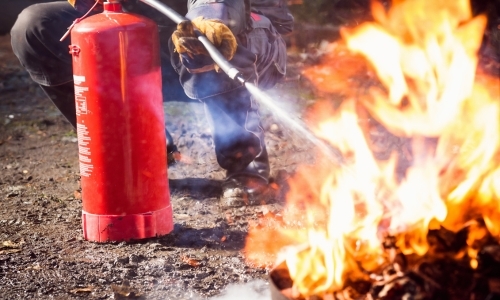
Employees are not legally obliged to extinguish an incipient fire. They therefore do not have to take any personal risks. However, there is an obligation to help minimize the damage as far as possible. This may include alerting the fire department or operating a fire extinguisher, provided there is no risk to their own health. A well-founded assessment of the risk is crucial here.
Important: In such cases, it is relevant that employers offer regular fire safety training. Employers must instruct employees appropriately and comprehensibly in accordance with Section 6 ArbStättV based on the risk assessment.