
Large building complexes pose particular challenges for specialist planners when it comes to segmenting individual fire compartments. Building regulations, insurance requirements, and applicable standards and guidelines must be complied with—yet the appearance of the building should not be compromised by fire protection equipment.
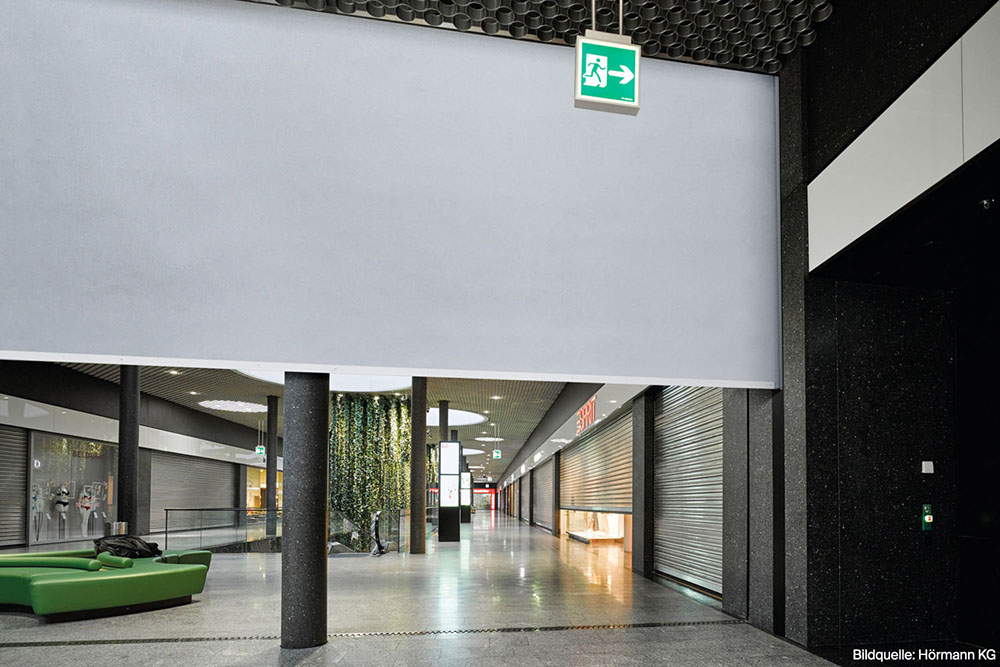
Necessary openings in walls and ceilings can be reliably closed with a smoke or fire protection curtain in the event of a fire. The aim is to limit smoke and flames to the area where they originate. Various types of fabric in folding or roll-up technology enable a wide range of applications – from ceiling and wall to soffit installations.
Benefits of fire curtains
Solid fire doors, such as those commonly found in large-scale industrial production areas, rarely fit in with modern architecture. Open-plan designs in office buildings or shopping centers therefore require different solutions to meet fire safety requirements.
Fire curtains offer an attractive and often cost-effective alternative. Their advantages are:
- Low installation heights
- High flexibility in adapting to structural conditions
- Discreet integration into the room design
- Possibility of invisible installation in new buildings
Within a fire compartment, these systems can also be used to reliably separate and protect sensitive areas of the building.

Smoke and fire protection curtains: the difference
In the event of a fire, a smoke protection curtain extends to a pre-calculated area and closes off the top of the building. This allows smoke and hot fire gases to be captured in a targeted manner, preventing them from spreading to other areas.
A fire protection curtain goes one step further: it prevents the spread of fire for a defined period of time and can withstand extreme temperatures for 120 to 180 minutes.
Classification according to DIN EN 16034 and DIN EN 13501-2 is divided into the following categories:
- E = Room closure
- EW = Room closure with reduced heat radiation
- EI = Room closure with insulating effect
Depending on their design, the systems meet the building regulations requirements for fire retardant, highly fire retardant, or fire resistant.
How smoke and fire curtains work
The fabric of a vertically closing fire curtain is housed in a box, similar to a roller blind. It is activated by a fire alarm control panel, the system's own detectors, or an emergency manual switch. The curtain then automatically moves into the sealing position.
Even in electrically operated models, self-closing is guaranteed in the event of a power failure. Different types of fabric allow for indoor and outdoor use.
Operator obligations
A fire or smoke protection curtain must be checked at least once a month by trained personnel to ensure that it is in good working order. The results must be documented and stored in the test log.
Maintenance of fire curtains
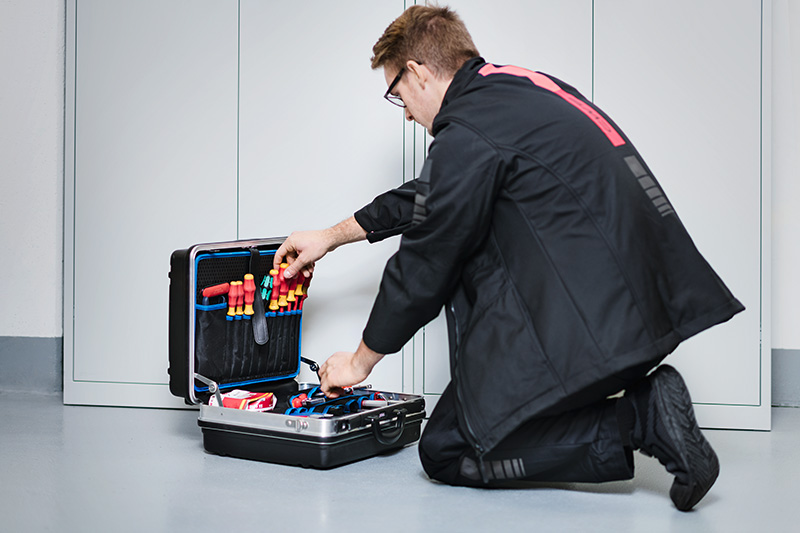
To ensure proper functioning in an emergency, annual maintenance by a specialist company such as CWS Fire Safety is required. The scope of maintenance includes:
- Visual inspection
- Checking the electronics
- Functional testing according to manufacturer specifications
Our qualified service technicians take care of the regular maintenance of your systems.
Use fire protection curtains in a compliant manner
The decision to install a smoke protection curtain or fire protection curtain should always be part of a comprehensive fire protection concept and should be made in consultation with the building inspectorate and property insurer.
Our experienced fire safety experts will support you from planning to implementation—for maximum safety and optimal protection.