
Fire protection in residential buildings is not an option, but a legal obligation. The German building regulations of the federal states stipulate clear requirements that are intended to save lives and protect property.
Fire protection regulations for residential buildings
The state building regulations (LBO for short) regulate the basic fire protection regulations for residential buildings. Buildings must be constructed in such a way that:
- the development of a fire is prevented
- the spread of fire and smoke is limited
- the rescue of people and animals is possible
- effective extinguishing work can be carried out
Load-bearing walls and ceilings must be able to withstand fire for different lengths of time depending on the building class. Depending on the type of building, fire compartments must be formed. There are further requirements for escape routes such as stairwells, especially in high-rise buildings. There are also, for example, specifications for the placement of solar systems (PV systems) on residential buildings.
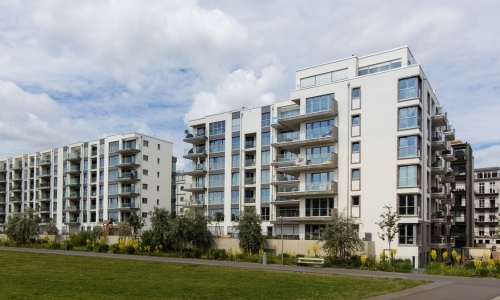
Smoke alarms save lives
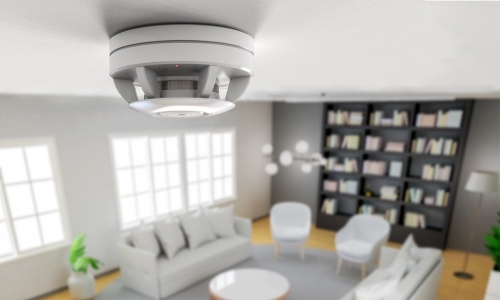
Smoke alarms are mandatory for residential buildings in all federal states. This applies to both new and existing buildings. They must be installed in
- Bedrooms
- Children's rooms
- Corridors that serve as escape routes
The devices detect even the smallest smoke particles and sound a loud alarm. They are particularly important at night and provide a decisive time advantage for escape.
Residents' duties
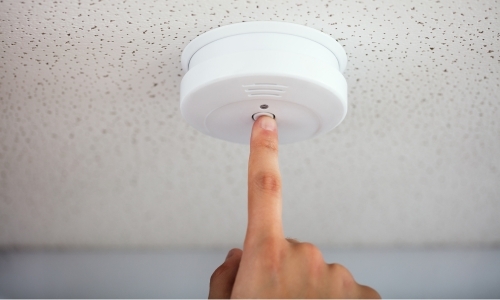
Responsibility for fire safety does not lie solely with owners and landlords. Residents also have a duty to actively contribute to fire safety. This includes regularly checking smoke alarms and handling electrical appliances properly, as technical defects are often the cause of fires.
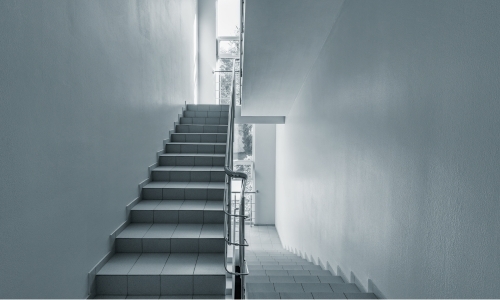
In addition, escape routes must be kept clear at all times. Storing baby carriages, bicycles or other objects in the stairwell is not only annoying, but can also be life-threatening in the event of a fire.
Another often underestimated danger is fire loads in shared areas such as cellars or attics. Paper, cardboard boxes or old furniture stored here can lead to a rapid spread of fire in the event of a fire and produce toxic fumes. These areas should therefore be cleared out regularly and checked for unnecessary fire loads.
Good to know: Fire extinguishers in residential buildings are often not mandatory. Nevertheless, it is advisable to provide fire extinguishers in suitable locations in residential buildings. This way, an incipient fire can be extinguished with a fire extinguisher and worse can be prevented.