
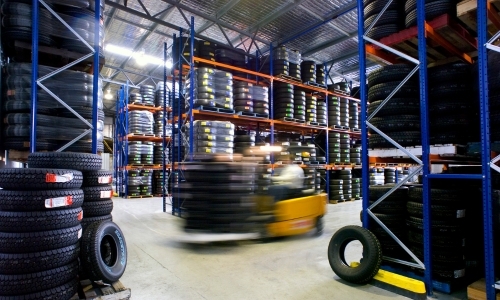
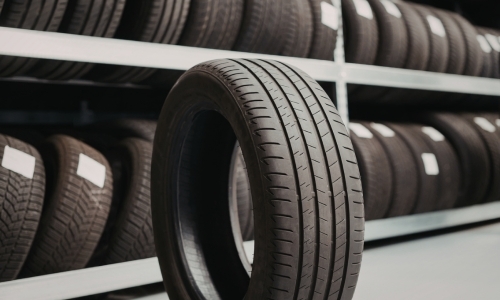
Tyre warehouses pose a considerable risk due to their high fire load and specific storage conditions. Tyres consist of around 40% rubber, enriched with plasticisers and vulcanising agents – a highly flammable combination.
A single burning tyre releases about as much energy as 20 kg of dried wood. In storage facilities with several thousand tyres, this results in extreme fire intensity.
Fire protection in tyre storage: further challenges
In addition, burning tyres release highly toxic fumes that severely impair visibility and hamper rescue operations. Without functioning fire protection technology, there is a high risk of total loss in an emergency. Firefighting is also challenging: tyres are water-repellent, dense and often stored upright on shelves. Cramped shelves, stacked tyres and limited ventilation promote rapid fire spread and make it difficult to access the source of the fire.
Potential ignition sources such as electrical installations, defective lighting or heating devices can cause accidental ignition. Combustible liquids such as oils or cleaning agents further increase the overall fire load. If tyres are stored outdoors, weather conditions and vandalism are additional risk factors.
Legal requirements & technical guidelines
The storage of tyres is subject to various legal requirements. These include:
- State building regulations (LBO) and the Model Industrial Building Directive (MIndBauRL)
- Workplace Ordinance (ArbStättV)
- Technical rules for workplaces (ASR A2.2)
- Recommendations from property insurers and the fire brigade
- Model Plastic Storage Guideline (MKLR) – updated since March 2023, especially for old tyres or plastic waste from 200 m³
Regular maintenance and inspection is mandatory
Regular maintenance and inspections are essential for reliable preventive fire protection in tyre storage facilities. All fire protection equipment should be inspected and serviced at least once a year by certified specialists to ensure that it is in good working order in the event of an emergency. In addition, the use of thermography can be helpful in detecting potential overheating at an early stage and initiating targeted countermeasures.
Furthermore, it is important to consistently remove all flammable liquids and old equipment that is no longer in use from the tyre storage area. Storage discipline also plays a crucial role: mixed storage with other materials is not permitted and can significantly increase the risk of fire.

How CWS Fire Safety supports fire protection in tyre storage facilities
As a comprehensive specialist in preventive fire protection, CWS Fire Safety offers individual solutions for tyre storage facilities of all sizes:
- Risk analysis and consultation directly on site
- Creation and implementation of tailor-made fire protection concepts
- Installation and maintenance of fire alarm systems, smoke and heat extraction systems and extinguishing technology
- Training for your employees
- Use of sustainable products such as fluorine-free fire extinguishers or water mist extinguishing systems
Our more than 20 locations in the United Kingdom guarantee short distances and rapid assistance – for effective protection of your employees, property and the environment.