
Fire safety plans are only effective if they are based on accurate and up-to-date information.
A fire safety inspection of the property is therefore the first and most important step in creating or revising these plans. It serves to gather information and ensures that all fire safety-related aspects of a building are correctly recorded and documented.
When is a property inspection necessary?
An on-site inspection is always necessary when new fire safety plans are to be drawn up or existing plans are to be revised.
The reason: only by recording the actual condition of a property is it possible to develop reliable and usable plans—whether these are fire department plans, escape and rescue plans, or seating plans.
Additional use cases for property inspections include:
- Renovation or refurbishment measures that involve changes to escape routes, fire compartments, or technical facilities
- Changes in the use of parts of buildings, for example, from storage space to event area
- Regular quality assurance checks, especially in sensitive areas such as schools, care facilities, or event venues,
- Preparations for official approvals or external certifications (e.g., according to DIN or ISO),
- Creation of evacuation concepts and emergency plans for larger companies or public institutions.
What is recorded during a property inspection?

The data to be recorded varies depending on the type of fire protection plan. During the inspection, all safety-related information must be recorded in detail. This includes, among other things:
- Fire department plans: Access points, fire compartments, sources of danger, technical equipment
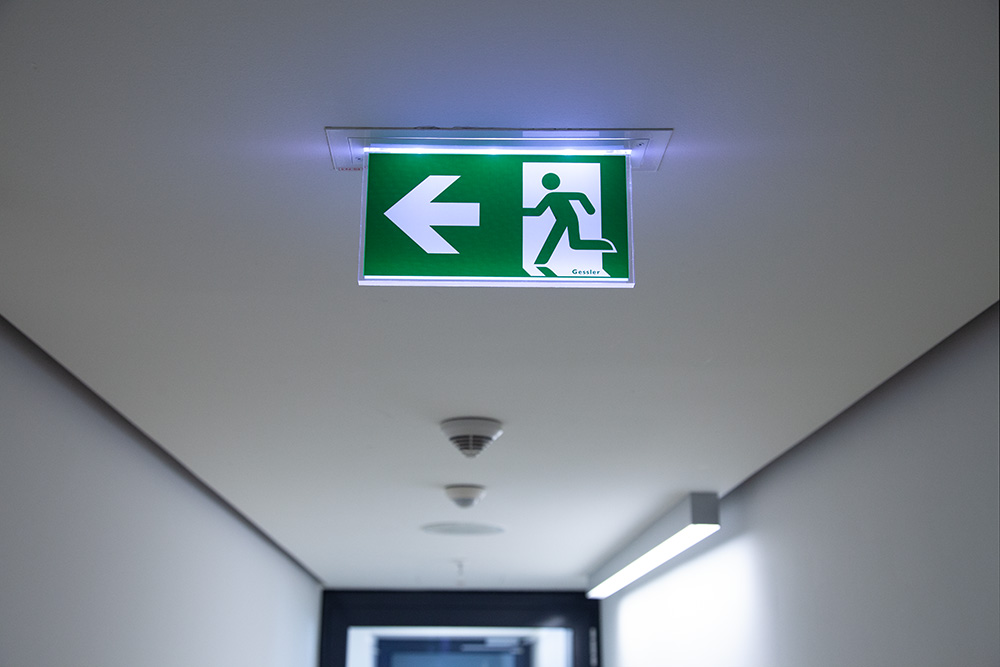
- Escape and rescue plans: Escape routes, emergency exits, fire extinguishers, first aid facilities
- Site plans: Position of the fire alarm control panel, fire department key depot, isolation devices, fire department information center
- Room data: Room layout, stairways, door stops, windows, room designations
- Event areas: Seating type, aisle widths, escape capacities, emergency exits
- Each of these points is crucial for ensuring that everything runs smoothly in an emergency – whether for rapid evacuation or to provide optimal support to the fire department.
This is how a property inspection works
Before the inspection, it is determined which fire safety plans are required. The type of plan selected determines what information needs to be collected.
Internal company information is also often necessary—for example, for fire safety regulations, emergency plans, or evacuation concepts. This data can be collected during the inspection.
Why accurate data is vital
Only fully documented and up-to-date fire safety plans provide the guidance that can save lives in an emergency. Incorrect or outdated information can cost emergency services valuable minutes – with serious consequences. The property inspection is therefore not a formality, but a key safety tool in preventive fire protection.
Your partner for fire safety inspections

CWS Fire Safety supports you with its many years of experience and comprehensive expertise in every phase of your fire protection planning.
Our experts know what is important when it comes to recording fire protection-related data—precisely, efficiently, and reliably. Benefit from our comprehensive service: from site inspections and planning to final coordination with authorities and the fire department.