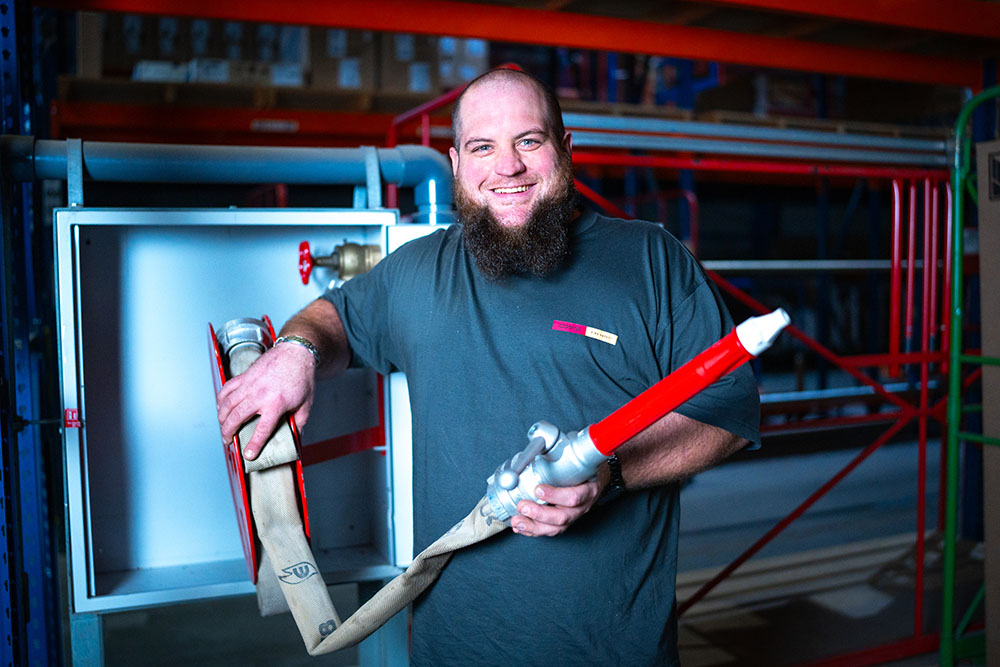
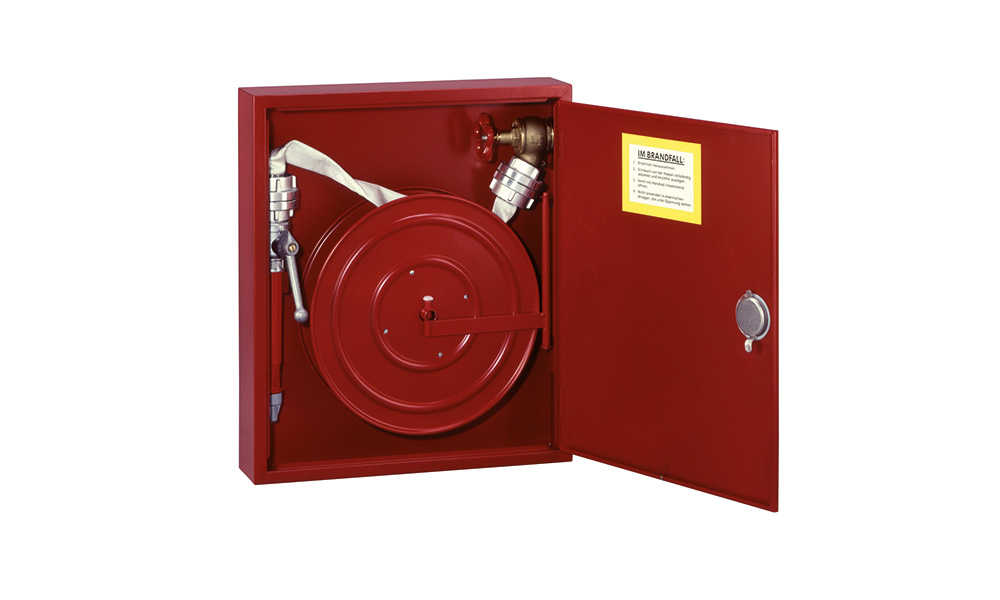
A hose connection valve is a central component of a wall hydrant. It serves as a connecting element between the permanently installed fire water pipe and the fire hose. In an emergency, it enables water to be drawn off quickly and is therefore an indispensable element in technical fire protection systems.
Function of the hose connection valve on the wall hydrant
The valve controls the water flow at the wall hydrant. When opened, it directs water from the pipe network into the connected hose and thus to the extinguishing point. Depending on the design, the valve is operated by a handle, lever or key.
It must close smoothly and tightly – because a leak or blockage can have serious consequences in the event of a fire. Proper functioning is therefore essential for operational safety.
Maintenance and servicing: What needs to be considered?
Regular maintenance of wall hydrants and thus also of the hose connection valve is required by law and crucial for long-term functional integrity. The following points are particularly important:
- Functional test: The valve must open and close smoothly.
- Tightness: No water may escape – even at maximum pressure.
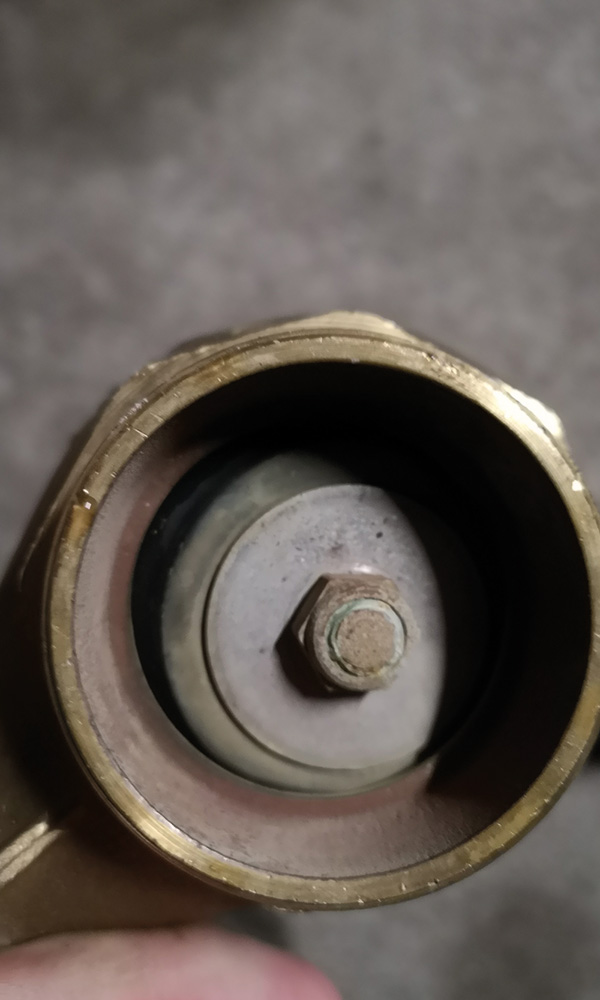
- Surface inspection: Check for excessive patina formation, as this can cause the spindle to seize up in the long term.
- Mechanical damage: Damaged valve tops or colour differences indicate previous replacement – in this case, replacement is recommended.
Caution with old valves: risk of sudden breakage
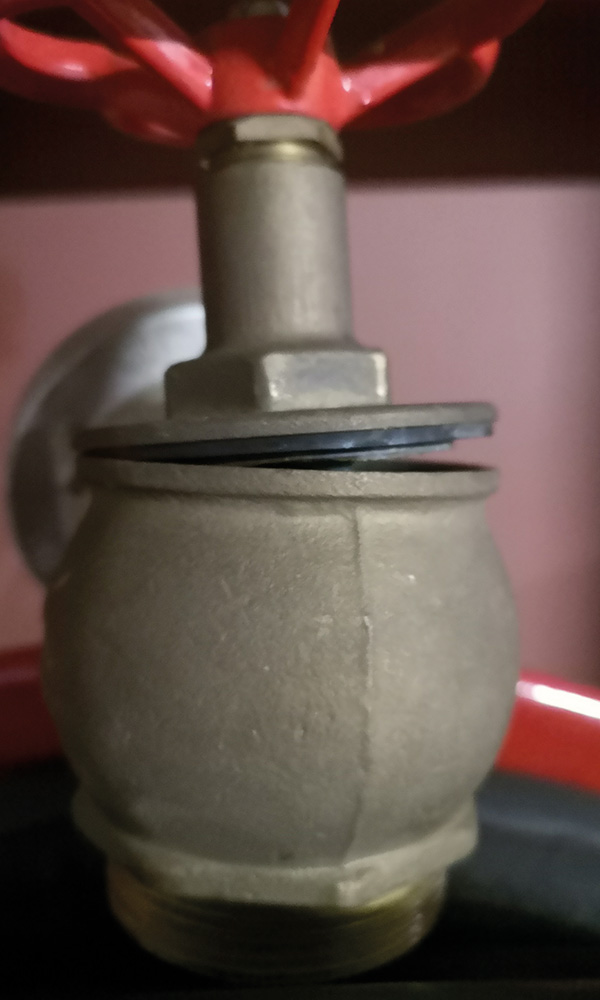
Even hose connection valves that appear intact but are outdated pose risks: if they are not replaced in good time, sudden breakages can occur when they are opened under pressure. In such cases, firefighting water escapes uncontrollably and under high pressure – which can not only cause water damage but also pose a risk to people.
A preventive condition assessment of the fittings is therefore essential, especially for older wall hydrants that are ten years old or older. CWS Fire Safety offers professional inspections, standard-compliant recommendations and, on request, replacement with tested components – for maximum operational safety and confidence in an emergency.
Obligation to replace in case of defects
Immediate replacement is necessary if:
- the valve is leaking,
- it is difficult to operate and this cannot be remedied by lubrication,
- there is visible severe corrosion or patina,
- there is mechanical damage.
Even if there are no visible defects, general replacement is recommended after 15 years at the latest, regardless of the intensity of use. However, the actual service life may vary depending on the installation situation and maintenance intervals.
All abnormalities or recommendations for replacement must be noted in the test report. This is the only way to ensure complete traceability – an important aspect for insurers and fire safety inspections.
Small component, big responsibility
At first glance, the hose connection valve may seem inconspicuous – but in the event of a fire, it can make the difference between life and death in a matter of seconds. Regular inspection and professional maintenance by qualified specialist companies such as CWS Fire Safety is essential.
Our experts reliably check your wall hydrants and professionally document their condition – for maximum safety in every situation.