
A hydrant sign is a standardized sign that indicates the location of a hydrant for drawing extinguishing water. It is an essential element of public safety and plays a central role for the fire department and rescue services in the event of a fire.
The marking enables hydrants to be located quickly and precisely - even in poor visibility, snow or overgrown surfaces.
Why is a hydrant sign important?
In an emergency, every second counts. A hydrant sign ensures that emergency services do not have to search for the hydrant first. Clear signage is particularly important for underground hydrants, which are located below ground level.
In addition to being easy to find, hydrant signs also meet legal requirements, such as DIN 4066, which regulates the design and lettering.
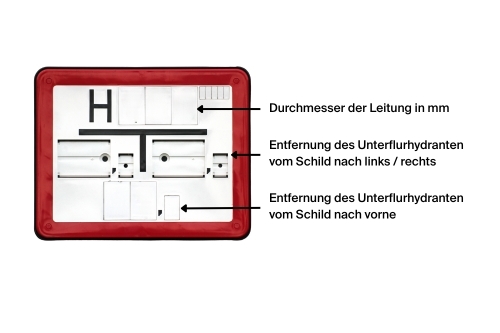
What does a hydrant sign look like?
A typical hydrant sign has a rectangular format and is usually white with a red border. It is made of weatherproof metal or plastic and is reflective so that it is clearly visible even in the dark.
The most important elements on a hydrant sign:
- Large letter “H”: stands for hydrant.
- Diameter of the pipe (top): In millimeters, e.g. “100” for a 100 mm pipe.
- Position details (bottom):
- Number on the left: Distance to the left (in meters).
- Number on the right: Distance to the right.
- Number at the bottom: Distance to the front (as seen from the sign).
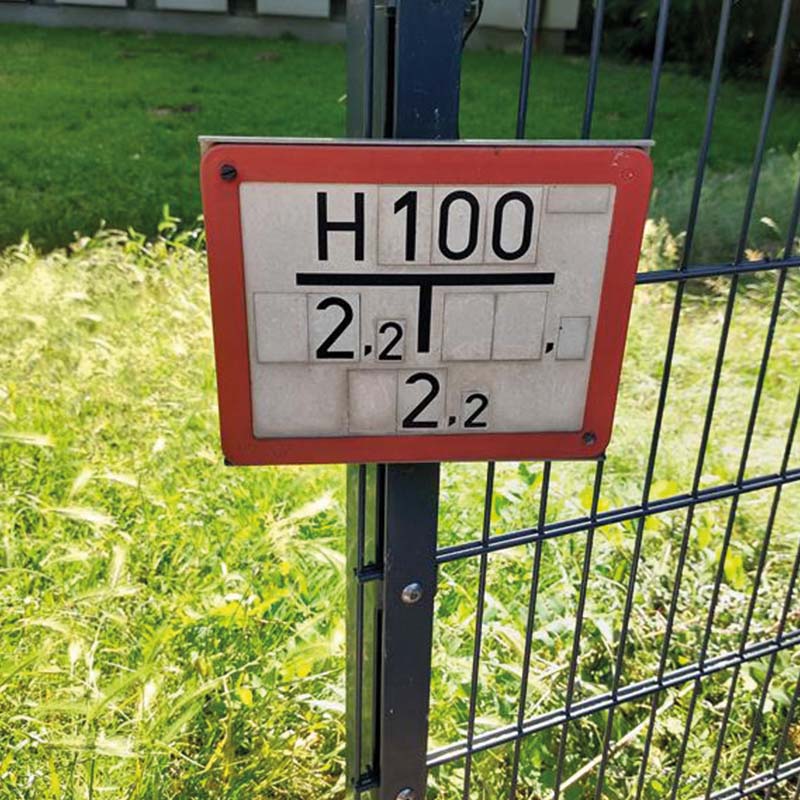
Example of the marking on a hydrant sign
Explanation:
- The hydrant is connected to a 100 mm pipe.
- It is located 2.2 m to the left and 2.2 m in front of the sign.
Difference between above-ground and underground hydrants
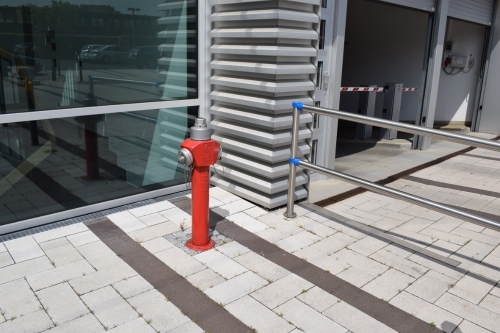
An above-ground hydrant protrudes from the ground and is usually immediately visible. The signage here is mainly for long-distance visibility and quick recognition.
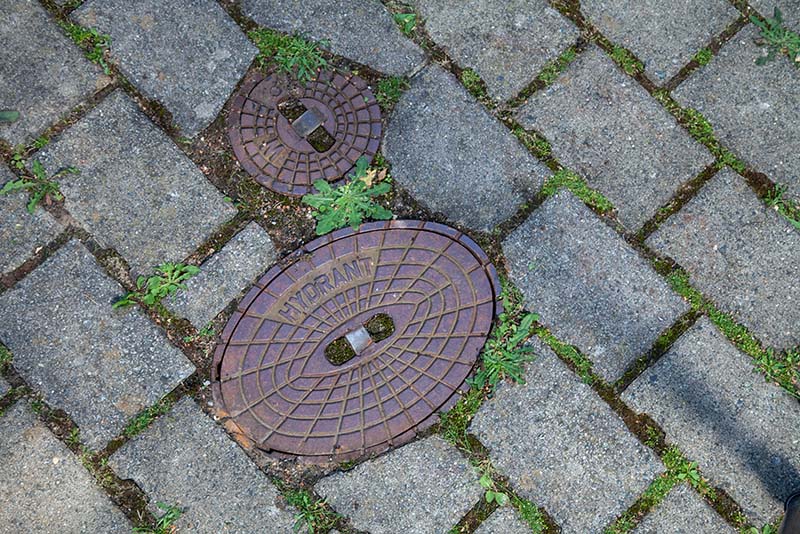
An underground hydrant, on the other hand, is located under a closed flap in the ground - usually in sidewalks or streets. Here, the hydrant sign is essential to find the exact position
Where are hydrant signs installed?
Hydrant signs are clearly visible at the following locations:
- house walls
- lamp posts
- fences
- street signs
- Own posts near the hydrant
The mounting height is usually 1.5 to 2.5 meters above the ground so that the sign is not obscured by parked vehicles or masses of snow.
Small signs with a big impact
The hydrant sign is an inconspicuous but vital element of the urban infrastructure. It helps to fight fires faster and more efficiently and saves lives in an emergency. Everyone should know what it stands for and how it works - not just the emergency services.