
Portable fire extinguishers are a key element in preventive fire protection. They enable fires to be tackled at an early stage and prevent major damage to people, buildings and property. They are therefore indispensable for companies, public institutions and educational establishments – and in many cases are required by law.
Below, we explain exactly what portable fire extinguishers are, what types are available, where they are used and how often they need to be serviced.
What are portable fire extinguishers?
A portable fire extinguisher is a hand-held extinguishing device with a total weight of up to 20 kilograms. It contains an extinguishing agent that is released under pressure to combat a fire in a targeted manner. Portable fire extinguishers are designed so that they can be used quickly and without special equipment by a single person.
Typical uses for portable fire extinguishers are:
- Fighting incipient fires in offices, workshops or production facilities
- Fire protection in public buildings such as schools, hospitals or administrative buildings
- Protecting sales and meeting venues
- Use in vehicles or technical facilities
Important: The specific selection of the right fire extinguisher depends largely on the respective fire class and local conditions.
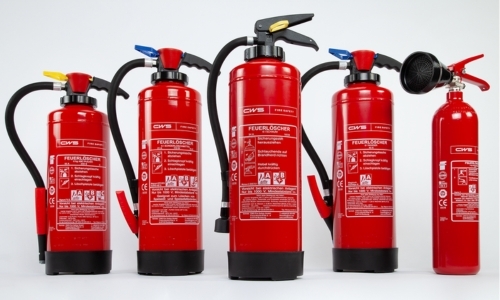
Overview of types of portable fire extinguishers
Different types of portable fire extinguishers are used depending on the fire risk. Choosing the right extinguishing agent is crucial for effective and safe firefighting.
Water extinguisher The water extinguisher is mainly used for fires involving solid materials (fire class A). It is particularly environmentally friendly and is suitable for areas with low risk potential. | Foam extinguisher A foam extinguisher is suitable for fires of classes A and B. It extinguishes effectively and causes significantly less consequential damage compared to powder extinguishers. | Powder extinguisher The powder extinguisher is a versatile all-rounder for fire classes A, B and C. It offers high extinguishing performance, but causes heavy soiling due to the extinguishing powder. |
CO2 fire extinguisher The CO2 fire extinguisher is particularly suitable for class B fires and for electrical equipment. As it extinguishes fires without leaving any residue, it is often used in server rooms, laboratories or technical areas. | Grease fire extinguisher A grease fire extinguisher is specially designed for class F fires, i.e. cooking oils and fats. It is indispensable in commercial kitchens, catering establishments and canteens. | Lithium fire extinguisher The lithium fire extinguisher was developed for fires involving lithium-ion batteries. With the increase in electromobility and battery use in industry and logistics, this fire extinguisher is becoming increasingly important. |
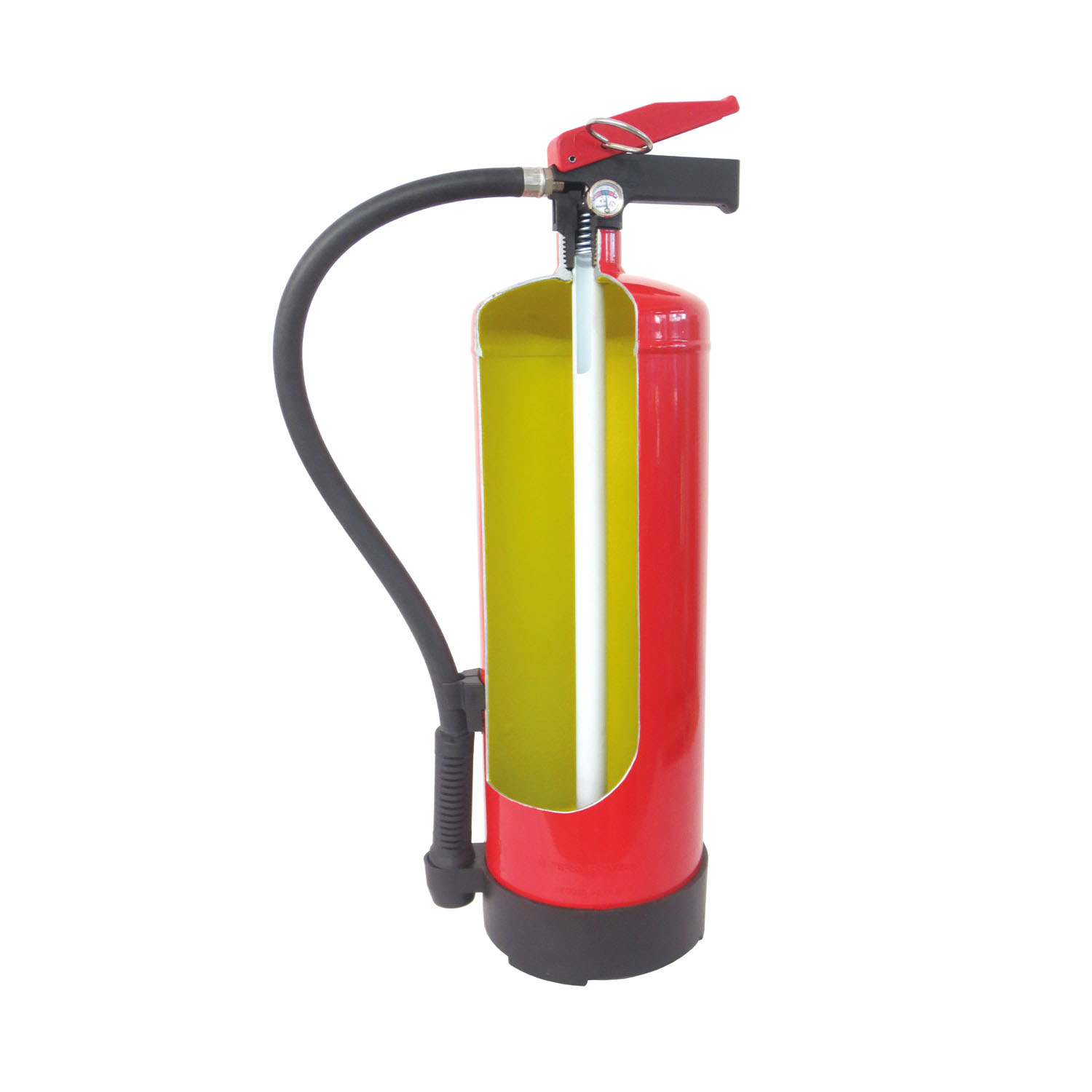
Portable fire extinguishers are also divided into stored pressure extinguishers and charged extinguishers. In stored pressure extinguishers, the extinguishing agent and propellant are kept under constant pressure. In charged extinguishers, the propellant is only released when the extinguisher is used.
Charged extinguishers are considered to be more durable and easier to maintain, while stored pressure extinguishers are often cheaper to purchase.
How often do portable fire extinguishers need to be serviced?
Regular maintenance of portable fire extinguishers is required by law. This is based on DIN 14406 and the Technical Rules for Workplaces (ASR A2.2), among other things. The following applies:
- Maintenance must be carried out by a qualified person at least every 2 years.
- In addition, visual inspections at regular intervals are recommended.
- After each use, immediate inspection and refilling is required.
Professional maintenance ensures that the portable fire extinguisher will function reliably in an emergency. Companies are obliged to document the inspections and to carry them out in a verifiable manner.
CWS Fire Safety takes care of the nationwide maintenance, servicing and legally compliant documentation of your fire extinguishers – efficiently and in accordance with standards.

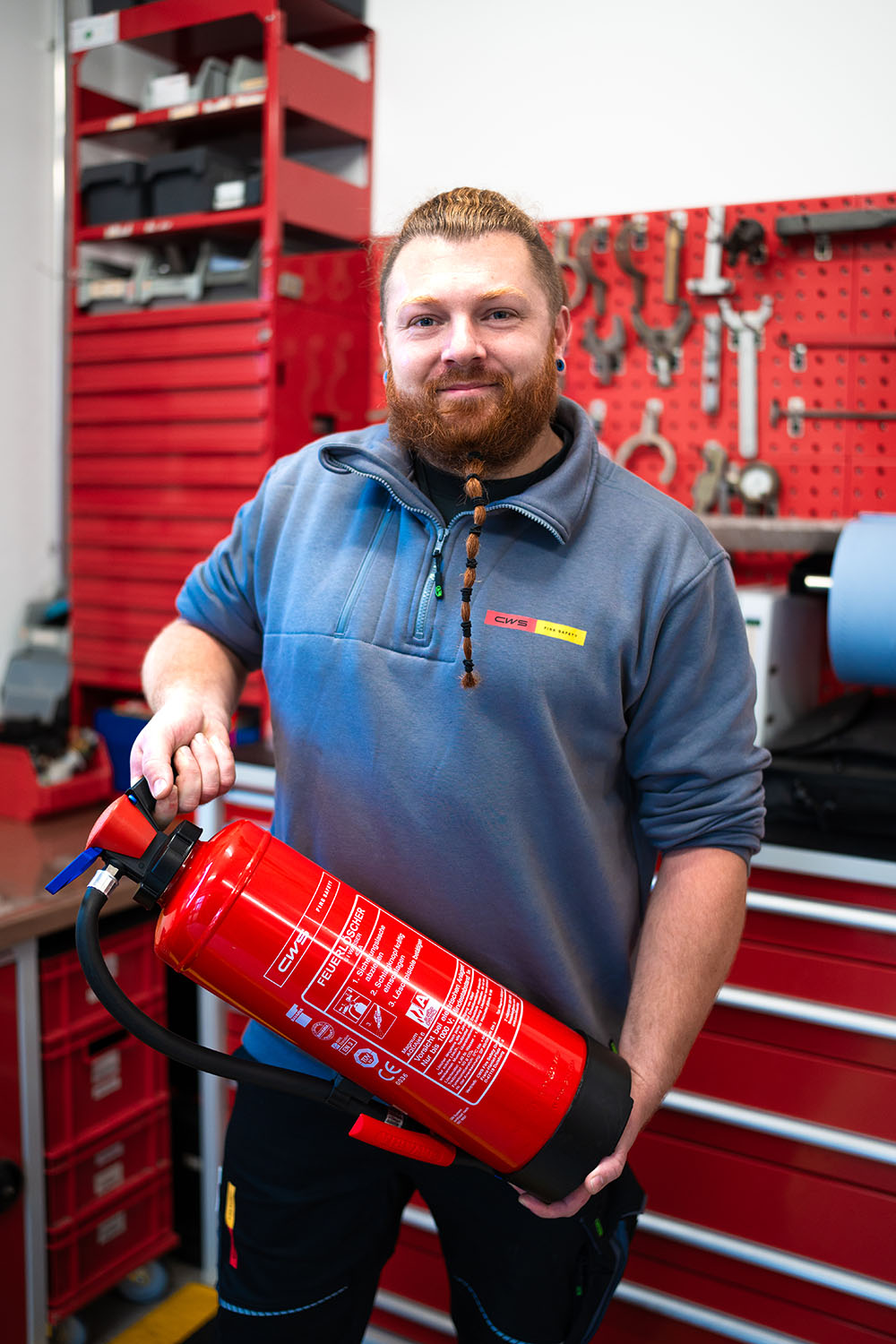
Portable fire extinguishers
an indispensable part of operational fire safety
Portable fire extinguishers are essential for protecting people and property. Choosing the right type – whether CO2 fire extinguishers, grease fire extinguishers, lithium fire extinguishers, powder extinguishers, foam extinguishers or water extinguishers – and regular maintenance are crucial for safety in your company.
Get individual advice from the experts at CWS Fire Safety and ensure optimal, standard-compliant fire protection in your facility.