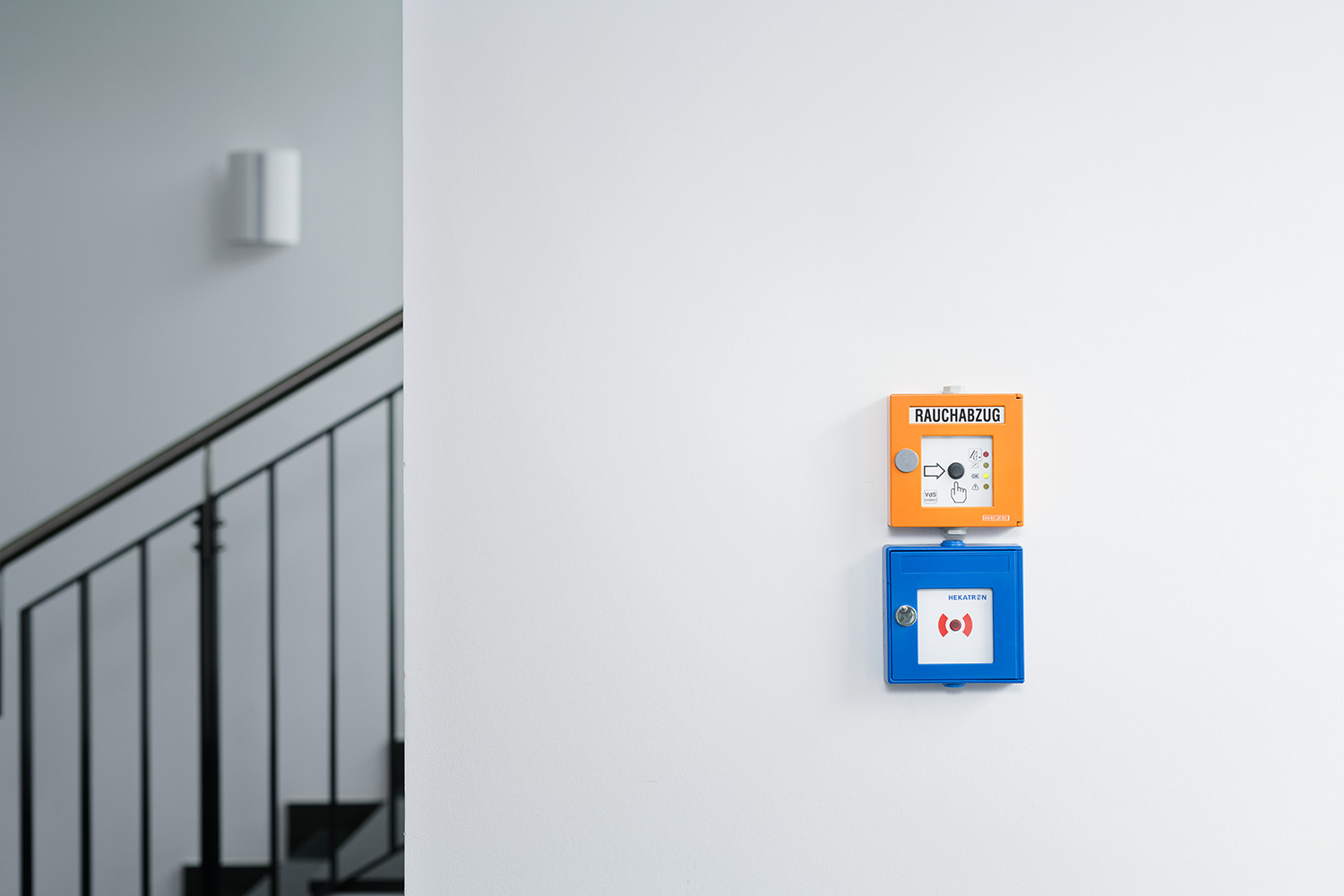
They are part of the basic fire protection equipment in public buildings, companies and facilities: push-button detectors.
What exactly is a push-button alarm?
Push-button detectors are manually operated triggering devices that are used in various security systems. Their principle is very simple: a glass pane protects the button underneath, which is exposed in an emergency by being smashed and then pressed.
A distinction is made depending on the area of application:
- Manual call points (for fires),
- hazard alarms (e.g. in the event of burglary),
- and functional detectors for technical systems such as smoke and heat extractors.
Color coding and housing materials
Damit im Notfall keine Verwechslung entsteht, ist die Farbgebung der Melder eindeutig geregelt:
- To avoid confusion in an emergency, the color coding of the detectors is clearly defined:
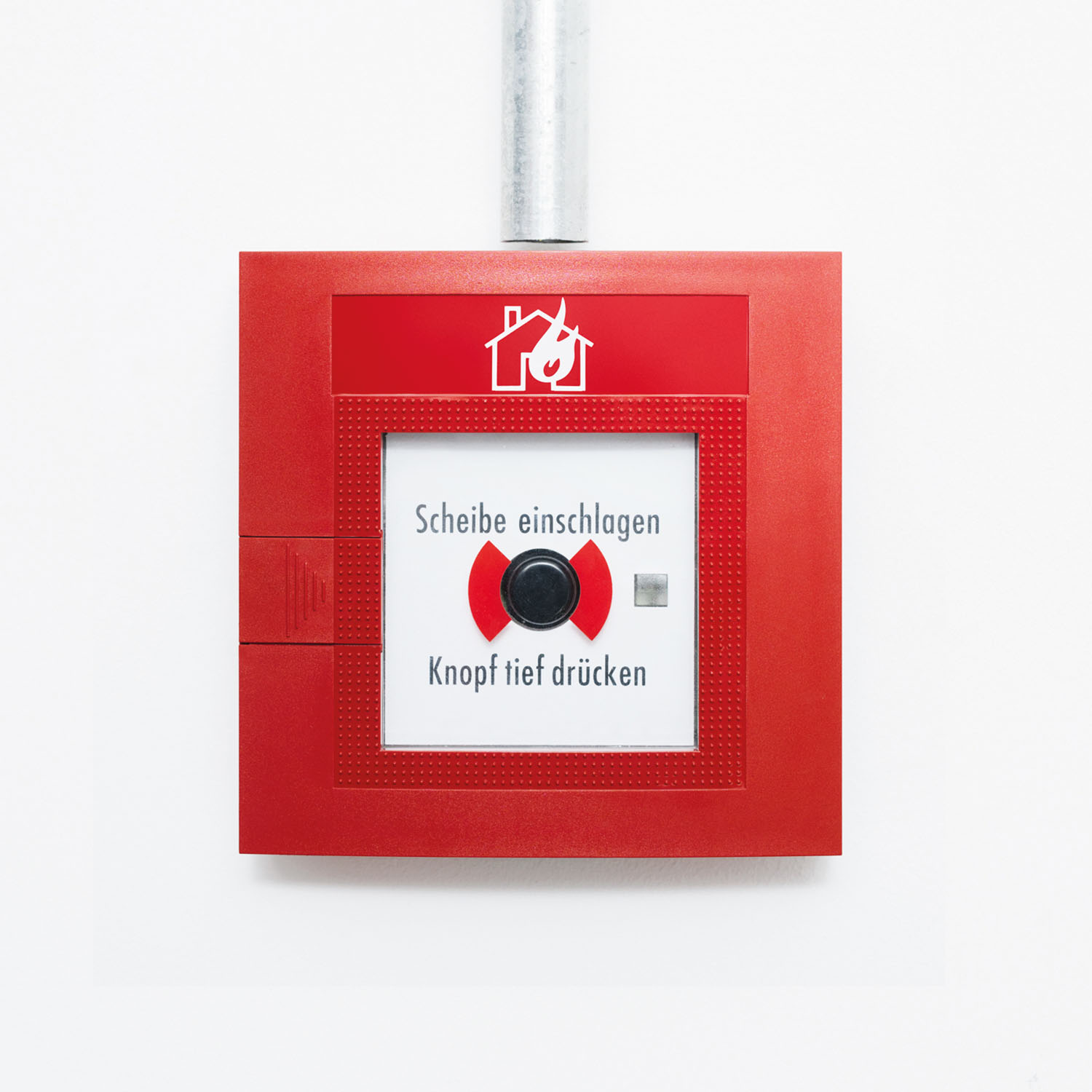
- Red (RAL 3000) indicates manual call points - i.e. for triggering in the event of fire and with connection to the fire department.
- Blue (RAL 5005) stands for hazard detectors, for example in connection with house alarm systems. They trigger an internal alarm in the building without being connected to the fire department.
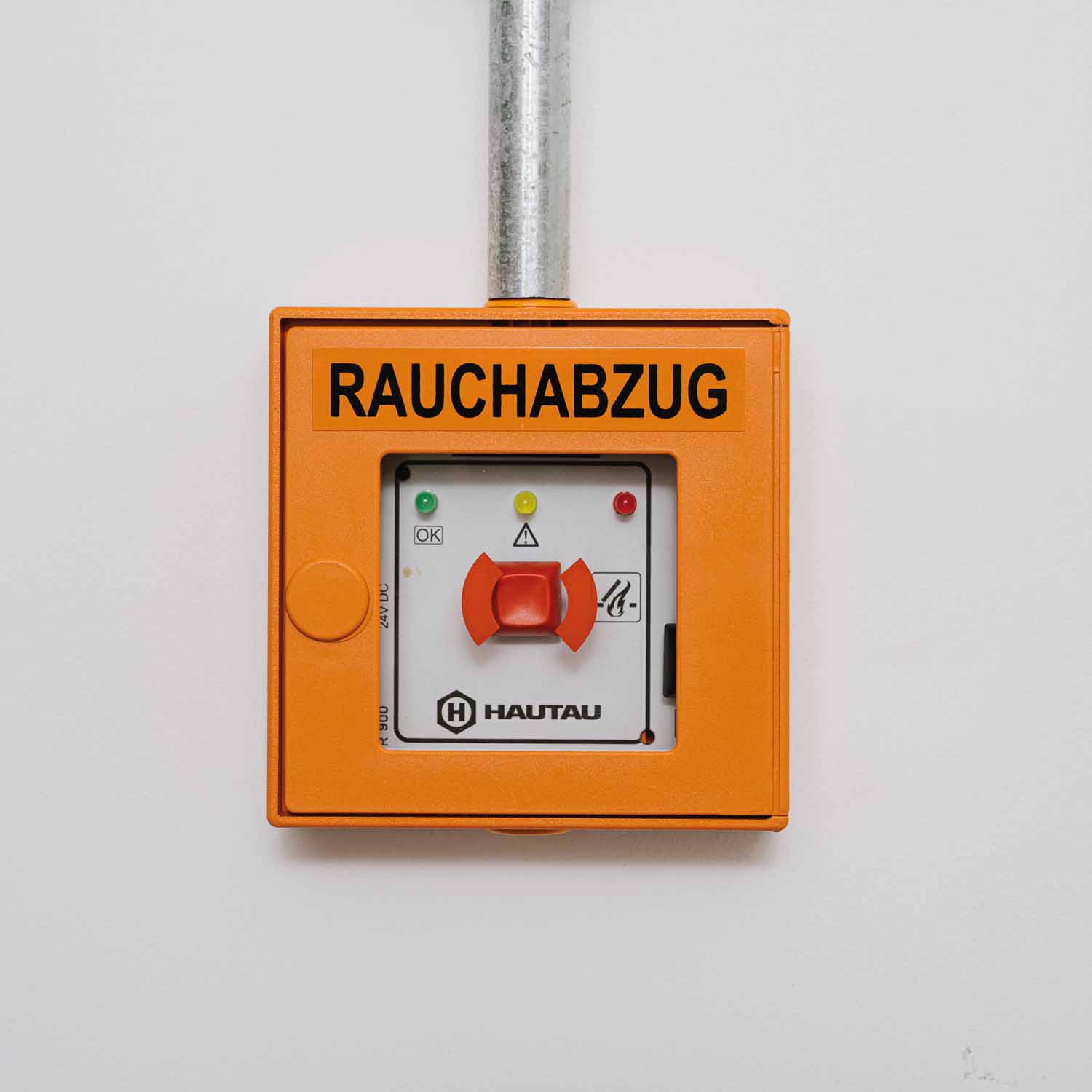
- Orange (RAL 2011) for triggering smoke extraction systems.
- Yellow (RAL 1021) signals special functions such as the manual activation of extinguishing systems.
The housings are made of either robust plastic or die-cast aluminum, making them reliable even under harsh conditions.
Manual call points in fire protection - in detail
In the event of a fire, the push-button detector assumes the function of a manual call point. It is firmly integrated into higher-level safety structures. A fire alarm is transmitted to the relevant control center via the fire alarm control panel (FACP), which enables the fire department to be alerted immediately.
In addition, actuation of the manual call point - via the activation of the fire alarm system - can trigger additional systems under certain conditions, including
- automatic extinguishing systems such as sprinkler or gas extinguishing systems,
- as well as smoke and heat extraction systems (SHEVS) for smoke extraction from escape routes.
Correct positioning: visible, accessible, intuitive
A push-button alarm can only perform its function reliably if it can be recognized and reached quickly. That is why its placement is strictly regulated:
- Along all escape and rescue routes
- Clearly visible, with additional signage if necessary
- Freely accessible - not obscured by furniture, plants or other furnishings
- Sufficiently illuminated, even in the event of a power failure via emergency lighting
- At a height of around 1.40 meters (+/- 20 cm), so that children and people with limited mobility can also trigger it without any problems
- Depending on the type of application, directly on the object (e.g. with yellow detectors)
These specifications are based, for example, on the assumption that the shortest escape route is chosen in the event of a fire - a manual call point must be available there.
Whether for alerting the fire department, activating an extinguishing system or starting a smoke extraction system: push-button detectors enable quick reactions in the event of danger. In the context of a fire, they take on a central function as manual call points.