
The safety of guests and employees is a top priority in hotels. Escape and rescue plans, fire safety regulations and fire department plans are of crucial importance in order to be able to react quickly and effectively in an emergency.
The Model Accommodation Facilities Ordinance (MBeVO) provides clear guidelines for this, which are regulated in detail in Section 12 in particular. This article highlights the most important requirements and shows how they should be implemented in practice.
The importance of escape and rescue plans
Escape and rescue plans are a central component of safety measures in hotels. In every accommodation room, an escape and rescue plan (also known as a room plan) must be displayed directly at the exit. They show guests the nearest escape routes and provide information on what to do in the event of a fire.
It is particularly important that the information is multilingual, as hotels are often frequented internationally. The information must therefore also be available in the languages that correspond to the origin of the usual guests. This is the only way to ensure that all guests understand the emergency measures and can act accordingly.
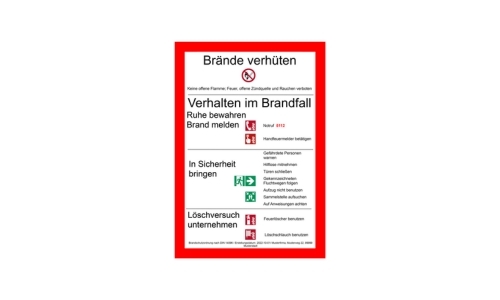
In addition to the escape and rescue plans, the fire safety regulations play a decisive role in hotel safety. They are mandatory for all accommodation facilities with more than 60 guest beds and contain rules of conduct in the event of a fire as well as preventative measures to avoid fires. The contents of the fire safety regulations include
- Fire prevention regulations, such as the correct use of electrical appliances.
- Instructions on how guests and employees should react in the event of a fire.
- Measures for rescuing people with disabilities, especially wheelchair users.
Important: These regulations not only serve to protect guests, but also as a training basis for staff. It is essential that employees are familiar with the contents of the fire safety regulations so that they can react correctly in an emergency.
Support for the emergency services
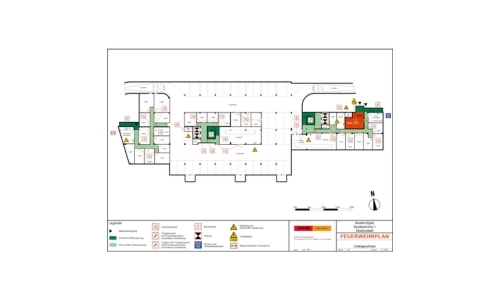
Fire service plans must also be drawn up for hotels with more than 60 beds. They provide emergency services with important information about the building, including the location of escape routes, hydrants and particular danger spots. The fire department plans help the emergency services to act faster and in a more targeted manner in an emergency.
Important: The operator is responsible for drawing up the escape and rescue plans, the fire safety regulations and the fire department plans in accordance with Section 12 of the MBeVO. An intentional or negligent breach of the regulations will result in an administrative offense.

Staff training
In addition to drawing up plans and regulations, the MBeVO attaches great importance to staff training. All employees must be instructed in the operation of fire protection equipment at the start of their work and at least once a year thereafter.
The training also includes the contents of the fire safety regulations and what to do in the event of a fire. Particular emphasis is placed on raising awareness of how to rescue people with disabilities who are particularly dependent on support in an emergency situation.
We support you
Escape and rescue plans, fire safety regulations and fire department plans are essential components of a comprehensive safety concept for hotels. They not only ensure the protection of guests and employees, but also fulfill the legal requirements of the Model Accommodation Facilities Ordinance. In order for operators to ensure that their facilities are optimally prepared, the professional creation and regular updating of these documents is essential.
As a specialist company, we are here to support you. Our CAD experts create the necessary plans after a thorough on-site inspection and adapt them precisely to the structural conditions and legal requirements. This way, you can be sure that all specifications are met and that you are optimally equipped for emergencies. Talk to us - we will be happy to advise you!