
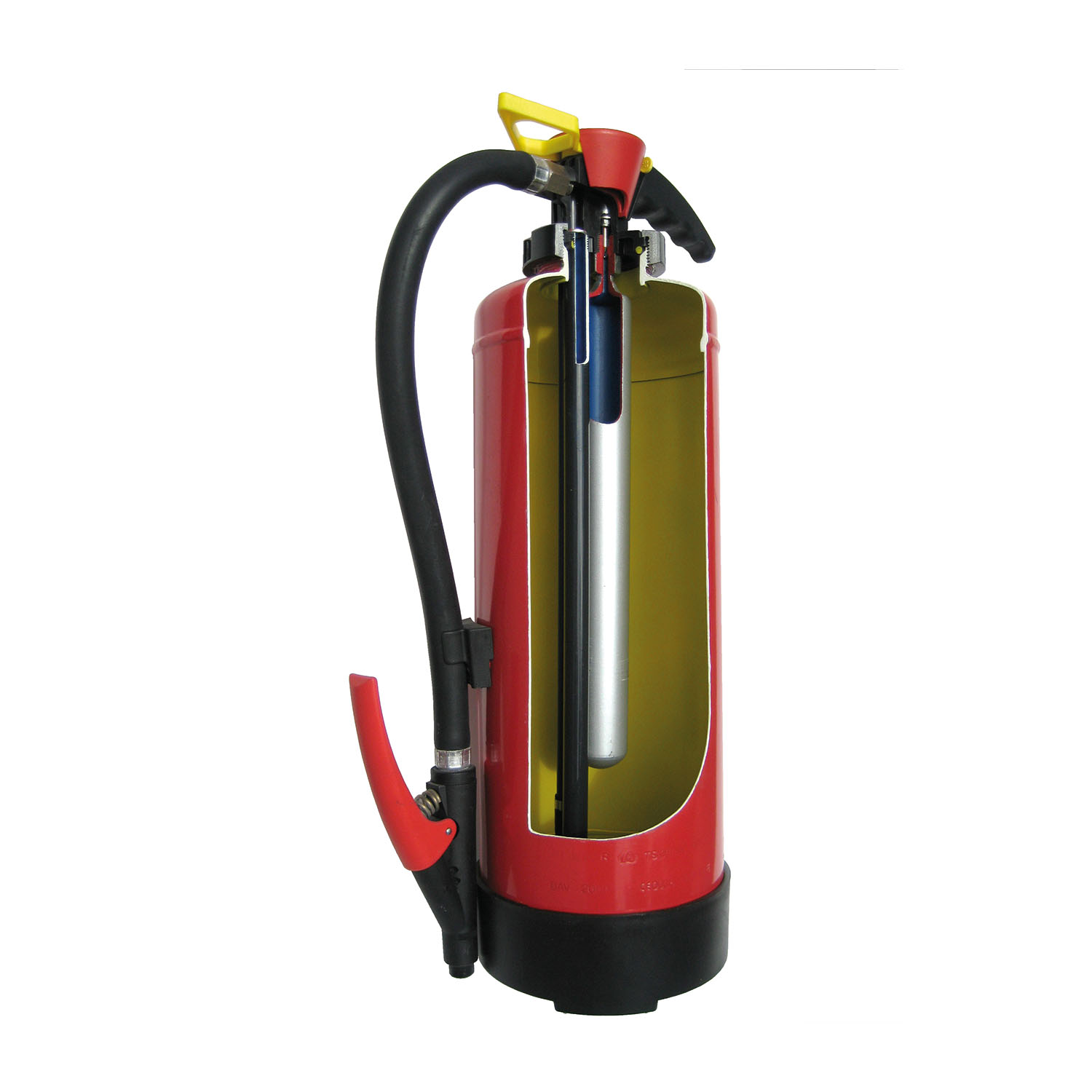
A rechargeable fire extinguisher consists of two central components:
- an extinguishing agent container and
- an integrated propellant bottle.
The extinguishing agent, such as foam, powder or water, is located in the container, while the propellant gas is stored in a separate propellant bottle.
The separation of gas and extinguishing agent ensures that the propellant gas is only released when the fire extinguisher is activated via a lever or firing head fitting. As a result, the propellant gas flows into the extinguishing agent container and mixes with the extinguishing agent. Only then can the extinguishing process begin.
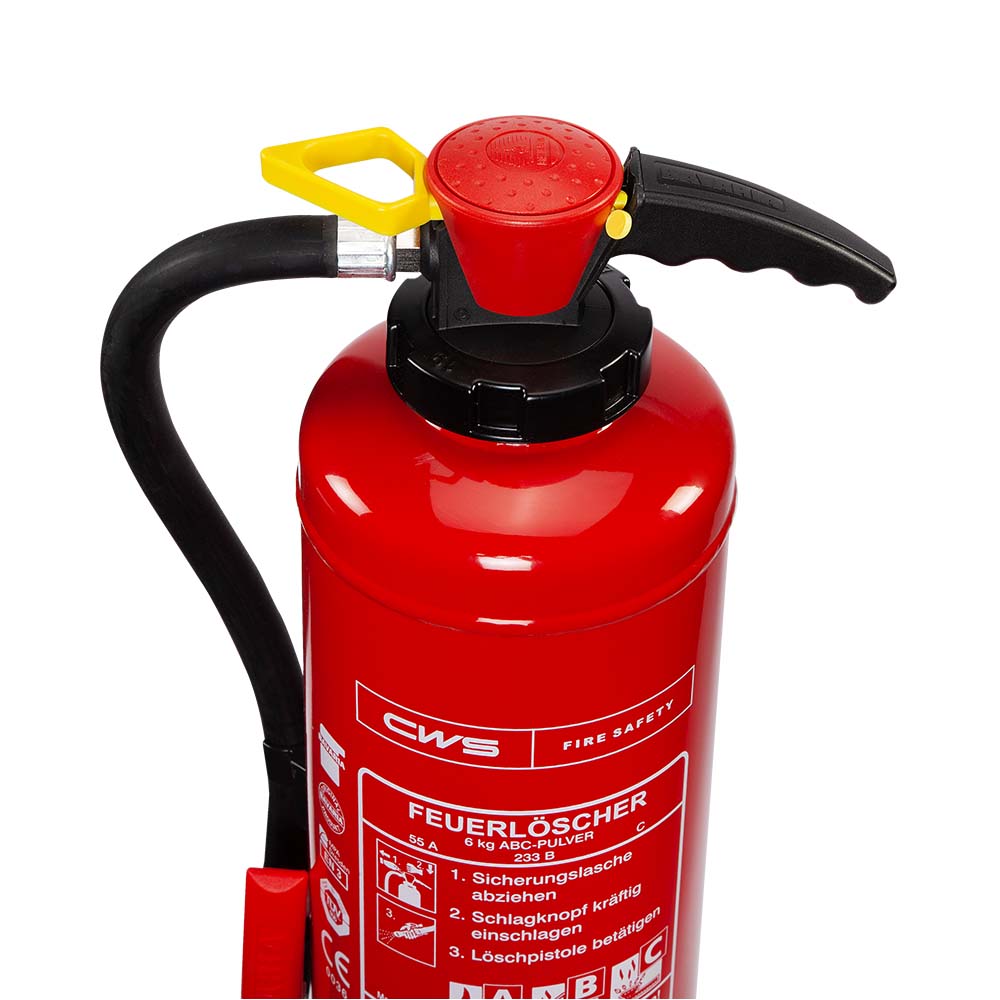
Rechargeable fire extinguishers are available for the following extinguishing agents:
- Water - fire class A
- Foam - fire class A and B
- Powder - fire class A, B and C
Benefits of a rechargeable fire extinguisher

Safe use: The propellant is only released when activated. This prevents pressure loss in the idle state. Readiness for use is permanently guaranteed.

Maintenance-friendly: They cause lower maintenance costs. There are also models that store the extinguishing agent (foam) in a separate cartridge.

Long service life: The separation of propellant gas and extinguishing agent reduces the mechanical load on the fire extinguisher, resulting in a longer service life. Rechargeable fire extinguishers need to be replaced less frequently.
However, rechargeable fire extinguishers also have some disadvantages. The purchase costs are generally higher than for permanent pressure fire extinguishers, which can be particularly significant when equipping larger buildings. Operation is also somewhat more complex, as the extinguisher must be activated before use. In an emergency situation, this additional step can be perceived as cumbersome. In addition, they cannot use CO2.