
The new EU Regulation 2025/1988 will come into force on 23 October 2025, with far-reaching consequences for operators, users and manufacturers of foam fire extinguishing systems. The regulation regulates the phasing out of PFAS in firefighting foams and sets specific deadlines, exceptions and obligations.
Here you can find out what this means in practice – and which solutions are important now.
What are PFAS – and why are they problematic?
PFAS (per- and polyfluorinated alkyl substances) are synthetic chemicals that reduce the surface tension of water, thereby enabling the formation of a particularly uniform, fine foam. This foam forms a stable layer over burning liquids such as oils or fuels and prevents the water-foam mixture from mixing with these substances. Thanks to these properties, the risk of re-ignition is significantly reduced, as is the escape of dangerous gases.
For these reasons, PFAS have been used in fire-fighting foams for many years – especially for class B fires (liquid fires).
The problem is that PFAS are hardly biodegradable, accumulate in the environment and are considered potentially harmful to health. The EU is therefore pursuing the goal of gradually banning these substances.

PFAS ban: The current status
The new EU regulation provides for a gradual ban on PFAS in firefighting foams. From 23 October 2030, foam agents containing PFAS with a concentration of 1 mg/l or more may no longer be placed on the market or used.
Clear deadlines also apply to portable fire extinguishers!
PFAS ban for portable fire extinguishers
From 23 October 2030, PFAS-containing extinguishing agents may no longer be used in portable fire extinguishers if their concentration is at least 1 mg/l. The placing on the market of such products will already be prohibited from 23 October 2026.
The EU has set graduated transition periods so that users can plan for the change in good time.
From 23 October 2026, PFAS-containing extinguishing foams may no longer be filled into portable fire extinguishers or placed on the market. For alcohol-resistant foaming agents, the ban will come into force on 23 April 2027.
Important: As conventional foam extinguishing agents for portable fire extinguishers are no longer being produced, it is already impossible to replace the extinguishing agent in existing devices.
The use of existing PFAS-containing fire extinguishers will remain permitted until 31 December 2030. After that date, these devices may no longer be used and must either be retrofitted or replaced.
Important: Retrofitting is often not economically or technically feasible, which is why early planning for replacement is recommended.
Those who opt for fluorine-free alternatives now will not only ensure legal compliance, but also benefit from a smooth and economical transition. We also recommend that operators carry out a risk assessment for the treatment of extinguishing agents in stock, especially after an extinguishing operation.
Are there any exceptions?
Yes, the regulation provides for specific exceptions for certain areas of application – but not for portable fire extinguishers in civil use. One exception applies only to special applications such as:
- Military or civilian ships with grandfathering (equipment on board before 23 October 2025)
- Offshore installations in the oil and gas industry
- Operations under Directive 2012/18/EU (e.g. major accident establishments, but not civil aviation and airports)
Further exceptions for training and fire services
Notwithstanding the general ban, PFAS-containing fire-fighting foams with a concentration of 1 mg/l or more may still be used in certain cases until 23 April 2027. This applies, on the one hand, to use in training and testing, but only if all releases of the foam are completely collected. Secondly, public fire services and private fire services with public duties may continue to use PFAS-containing extinguishing agents – with the exception of operations in industrial plants covered by the Seveso III Directive (2012/18/EU), provided that the foam is intended exclusively for this purpose.
Operator obligations & labelling from 2026
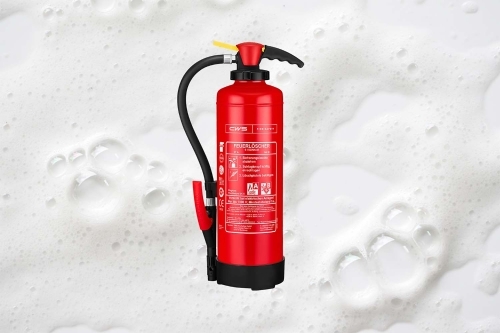
New operator obligations will apply from 23 October 2026. Fire-fighting foams containing PFAS may then only be used to fight fires involving flammable liquids (fire class B). Operators must ensure that emissions into the environment and exposure to humans are kept to a minimum. In addition, unused foam agents, waste and wastewater must be collected separately and disposed of properly.
It is also mandatory to draw up a management plan containing information on application quantities, maintenance, cleaning, emergency measures and a strategy for transitioning to fluorine-free alternatives. This plan must be updated annually and kept for at least 15 years.
From the same date, a labelling requirement will also come into force: foams containing PFAS at a concentration of at least 1 mg/l must be labelled with the warning ‘CAUTION: Contains per- and polyfluoroalkyl substances (PFAS) ≥ 1 mg/l’. The labelling must be clearly visible, permanent and in the official language of the Member State concerned – this also applies to stocks and waste.
What companies should do now
For companies, the new regulation means that now is the right time to take action. The first step is to take stock of all existing fire extinguishers and extinguishing systems to determine which devices contain PFAS-based foaming agents. Next, a conversion or replacement plan should be drawn up that not only takes into account the switch to fluorine-free alternatives, but also their timely procurement.
Equally important is the proper disposal of existing stocks – including compliance with all labelling and documentation requirements. Employees should also be trained and informed about the new requirements. Careful documentation of all measures creates transparency and is a clear advantage in the event of official inspections.
We support you
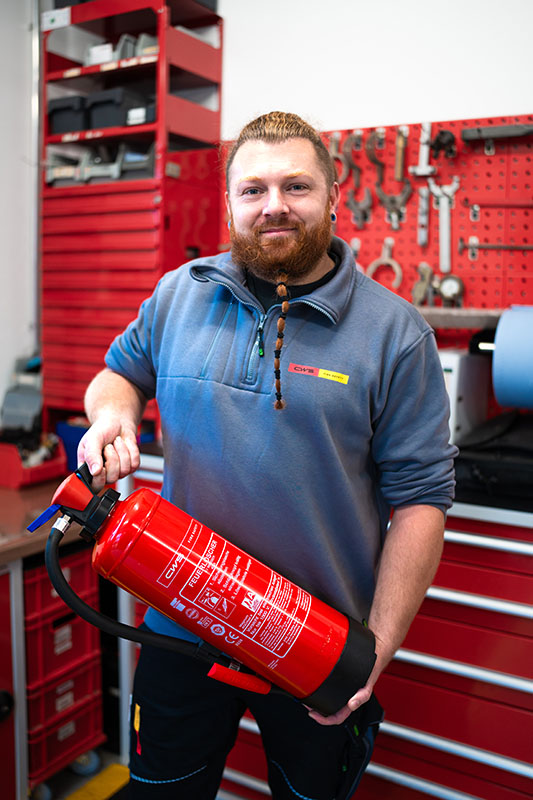
Switching to fluorine-free extinguishing agents is not only a legal obligation, but also an investment in sustainability and future security. CWS Fire Safety supports companies on this journey – reliably, predictably and with a clear focus on cost-effectiveness and safety.
We assist you in analysing your inventory, advise you on selecting suitable alternatives and, if desired, take care of the entire replacement process. It makes particular sense to use upcoming maintenance appointments to make the switch efficiently. This avoids double travel costs and prevents rising disposal costs after the deadlines have expired.
With CWS Fire Safety at your side, the transition to a PFAS-free fire protection solution will be smooth, sustainable and legally compliant.