
Fire safety in apartment buildings presents unique challenges for owners, property management companies, and facility managers. Many people live together in a confined space, escape routes are shared, and technical systems are complex. This makes a comprehensive fire safety plan all the more important—one that minimizes fire hazards, complies with legal requirements, and saves lives in an emergency.
Below, you’ll learn about typical risks, applicable regulations, and which fire safety equipment is recommended for apartment buildings.
Identifying Typical Fire Hazards in Multi-Family Buildings
In apartment buildings, fires often start in private living areas—for example, due to electrical faults, unattended candles, or overheated kitchen appliances. At the same time, common areas pose additional risks.
Among the most common fire hazards in apartment buildings are:
-
Defective or overloaded electrical systems
-
Improper use of open flames
-
Arson in basements or trash rooms
-
Technical malfunctions in heating systems
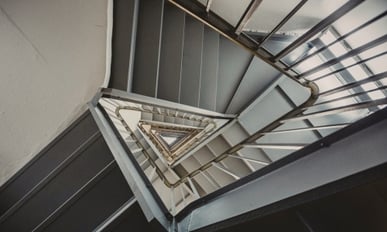
Particularly critical: Smoke spreads quickly in stairwells. Without functioning smoke detectors, clear escape route signage, and unobstructed escape and rescue routes, valuable time can be lost.
Legal Requirements for Fire Safety in Multi-Family Buildings
 Fire safety in multi-family buildings is clearly regulated in Germany. The regulations are based on the respective state building codes (LBO) as well as special building regulations if the building exceeds certain sizes or types of use.
Important requirements include, among others:
-
Mandatory smoke detectors in apartments (bedrooms, children’s rooms, hallways)
-
Ensuring that escape and rescue routes are accessible
-
Installation of fire-rated doors in required stairwells
-
Regular maintenance of technical fire protection equipment
Owners and landlords are required to ensure that these systems are installed. Depending on the state, residents are often responsible for ensuring that smoke detectors are in working order. Regular maintenance of fire safety systems ensures legal compliance and minimizes liability risks.
 Comprehensive, Systematic Fire Protection in Multi-Family Buildings
Effective fire protection in apartment buildings goes beyond simply installing individual products. The key lies in the synergy between:
-
Consulting and risk assessment
-
Professional installation
-
Regular maintenance and servicing
-
Training for responsible personnel
As a full-service provider, CWS Fire Safety supports you nationwide—from planning and installation to the maintenance of your fire protection systems. This ensures safety for residents, property, and the environment.